

When Mike Hedges first began working with The Cure in the late 1970s, he was a young engineer at Morgan Studios in North London, still establishing himself in a recording industry that was being shaken up by punk. While many of the older engineers regarded the new bands with a mixture of suspicion and indifference, Mike was excited by what was happening and more than happy to work with musicians who had little interest in following the usual rules.
It was an opportunity that would change the course of his career, leading to a close creative relationship with Robert Smith and the making of Seventeen Seconds, the album that gave The Cure one of their most enduring songs, A Forest.
Mike had joined Morgan Studios in Willesden as a tea boy before gradually working his way through the traditional studio ranks, learning his craft at a time when recording was still an entirely analogue process and engineers were expected to know the equipment inside out. The arrival of punk created an unexpected opening for younger studio staff, as some of the more experienced engineers were reluctant to work with the bands coming through, leaving Mike in exactly the right place to take advantage of the changing musical landscape.
His first sessions with The Cure included their debut single, Killing an Arab, and he went on to engineer their first album, Three Imaginary Boys, which was produced by Fiction Records founder Chris Parry. By the time the band began planning its follow-up, Robert Smith was keen to take greater control of the recording process and believed that he and Mike could make the record together without bringing in an outside producer.
For Mike, it was the chance to move beyond engineering and become more involved in shaping the music itself, exploring sounds and recording techniques that might help give the songs a character of their own. Robert would lead the musical direction, while Mike concentrated on finding the textures and atmosphere that could bring those ideas to life.
Neither was particularly interested in making another conventional rock album.
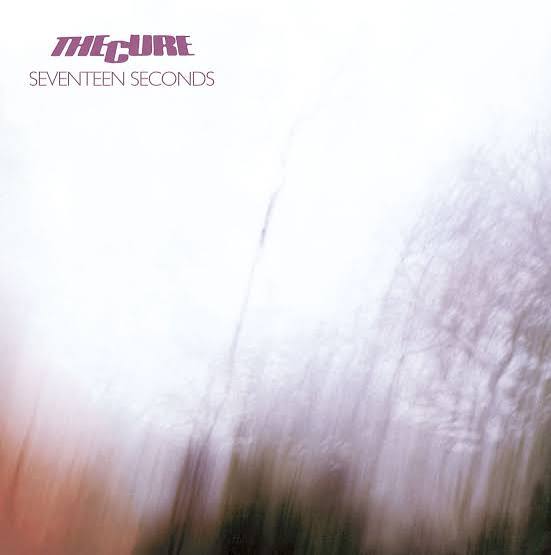
The Cure – Seventeen Seconds album cover
Finding the sound of Seventeen Seconds
By the time work began on Seventeen Seconds, The Cure had undergone a significant change in personnel. Simon Gallup had joined on bass, replacing Michael Dempsey, while keyboard player Matthieu Hartley had been added to the line-up alongside Robert Smith and drummer Lol Tolhurst.
The expanded group gave Robert more musical possibilities, but his vision for the album was surprisingly sparse. Rather than filling the arrangements with layers of guitars and keyboards, he wanted to create something restrained and atmospheric, with each instrument occupying its own space and the overall mood emerging from the interaction between relatively simple parts.
Mike was immediately attracted to the idea and began exploring how the recording itself could reinforce that atmosphere. One of his most important decisions concerned the drums, which he recorded using C-ducer contact microphones, a relatively new technology that allowed him to capture individual elements of the kit with very little sound spilling between them.
The result was unusually dry and controlled, with almost none of the natural room ambience that would normally have been part of a drum recording. Instead, Mike could introduce reverbs and delays afterwards, shaping the apparent size and character of the drums to suit each song.
It was a striking departure from the big, natural drum sounds that many studios were trying to achieve at the time, and it helped establish the cold, spacious quality that became such an important part of Seventeen Seconds.
The rest of the instrumentation was approached with similar restraint. Simon Gallup’s bass provided much of the movement and momentum, while Robert’s guitar parts were generally kept simple, often relying on carefully chosen effects rather than elaborate playing. Matthieu Hartley’s keyboards were even more restricted, with Robert insisting that most of the parts should consist of single notes rather than chords.
That decision didn’t always sit comfortably with Hartley, who understandably found the limitations frustrating, particularly when the band subsequently took the songs on tour. But the approach was central to the record’s character, allowing the individual instruments to remain distinct while creating an atmosphere that was far more powerful than the sum of its parts.
Mike and Robert were discovering that leaving something out could be just as effective as adding another layer.
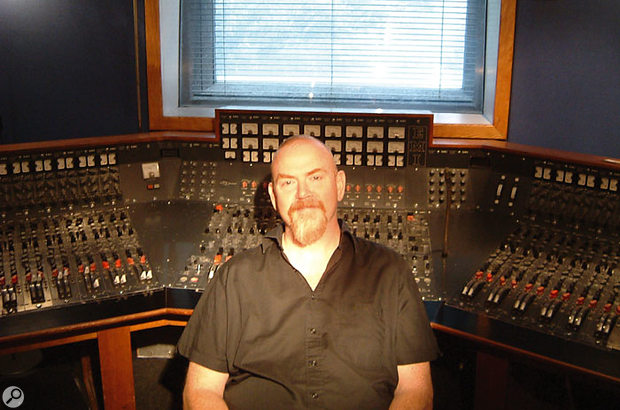
Mike Hedges today, with his ex-Abbey Road EMI console, now housed at Westside Studios.
Experimenting with tape, delays and effects
Much of the distinctive sound of Seventeen Seconds came from Mike’s willingness to experiment with whatever equipment he could find, and the sessions became an opportunity to explore techniques that were still relatively unusual in rock recording.
He became particularly interested in flangers and chorus effects, collecting different units from around the studio and borrowing others wherever possible. On A Forest, he used multiple flangers to manipulate the movement and texture of the instruments, creating sounds that seemed to shift and change as the music progressed.
Robert’s Roland Jazz Chorus amplifier was another important part of the sound, and by combining microphones with the amplifier’s stereo output, Mike was able to create a wide, shimmering guitar tone that complemented the sparse arrangements.
Tape delays were used extensively, sometimes with different delay times running together so that sounds appeared to move and overlap. Mike also experimented with feeding delayed signals back into themselves, allowing them to build into dense, unstable textures before gradually falling apart.
There was a certain unpredictability to working this way, which was part of the attraction. Unlike modern digital equipment, where effects can be recalled precisely and repeated indefinitely, analogue devices often behaved differently depending on how they were connected and operated. Mike enjoyed discovering those unexpected results and finding ways to incorporate them into the music.
Some of the most elaborate experiments involved creating long tape loops, which required running lengths of magnetic tape around the studio using pencils attached to microphone stands as improvised guides. These weren’t short rhythmic loops of the kind that would later become familiar through sampling and digital production, but passages stretching across sixteen or thirty-two bars, with the tape physically travelling around the room before returning to the machine.
Keeping everything running smoothly required considerable patience, as the slightest change in tension could cause the tape to slip or affect the pitch. Yet the technique allowed Mike and the band to create repeating patterns that could be transferred to the multitrack recorder and developed with further overdubs.
It was an ingenious way of making the available technology do something it had never really been designed to do, and it suited the experimental spirit of the sessions perfectly.
Seven days to make an album
For all the experimentation, the band had very little time in which to make Seventeen Seconds. The entire album was recorded and mixed in just seven days, working long hours at Morgan Studios with a budget that Mike later estimated at somewhere between £2,000 and £3,000.
The musicians were practically living in the studio, sleeping on the floor between sessions as they tried to make the most of the time available. Recording days could stretch to sixteen or seventeen hours, and although there was plenty of drinking and socialising once individual parts had been completed, the work itself was taken seriously.
Mike made a point of staying sober throughout the sessions, knowing that he needed to keep his concentration while everyone else was free to relax once their contributions were finished.
The limited schedule also shaped the way the album was recorded. Most of the backing tracks were played live by the band, with relatively few overdubs and very little opportunity to assemble performances from multiple takes. If a vocal or instrumental part wasn’t working, the simplest solution was usually to record it again rather than spend hours editing together a technically perfect version.
That approach gave the recordings an immediacy that might have been lost with a more elaborate production process, although it also placed considerable pressure on the musicians. The slower songs were particularly difficult, since the amount of space between the notes meant that any weakness in the timing or feel became immediately apparent.
Getting the bass and drums to sit together convincingly could take time that the band simply didn’t have, and Mike later recalled the challenge of recording such sparse, mid-tempo music under pressure.
Yet those limitations also encouraged decisions that might never have been made if the group had been given weeks to experiment. Rather than endlessly reconsidering every performance, they had to trust their instincts and move on, allowing the album to develop its own character as the sessions progressed.
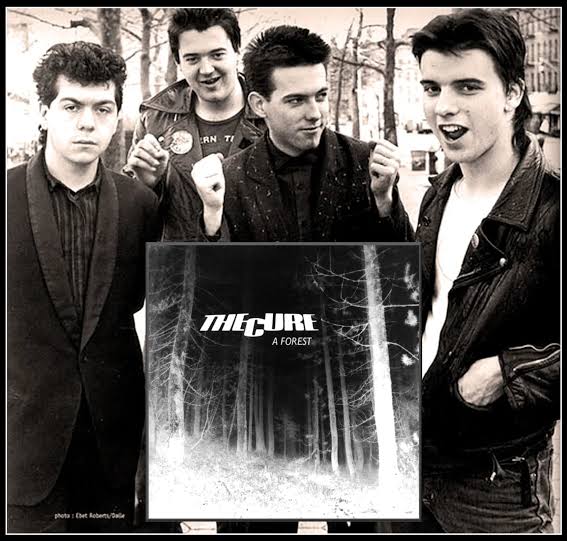
The making of A Forest
Among the last songs to be recorded was A Forest, which Mike and Robert already recognised as one of the strongest pieces of material on the album.
It was also likely to be the most demanding. While many of the other songs sounded relatively complete once the basic tracks had been recorded, A Forest needed more work to develop the atmosphere and sense of movement they were looking for.
The song’s hypnotic bass line, insistent rhythm and distinctive guitar figure provided the foundation, but Mike and Robert wanted the finished recording to have a richer, more carefully constructed sound than much of the rest of the album.
After recording the backing track, they returned to individual parts, replacing or adding instruments where necessary and building up the effects that would give the song its unmistakable character. The guitars shimmered through layers of modulation and delay, while the restrained rhythm section created a feeling of movement without ever disturbing the song’s underlying tension.
Robert’s vocal sat within the arrangement rather than dominating it, adding to the strange, unsettling atmosphere that runs through the recording.
Mike had felt from the beginning that A Forest had the potential to become a single, and the extra attention it received reflected that belief. While most of Seventeen Seconds was mixed on the penultimate day of the sessions, A Forest occupied a substantial part of the final day, an extraordinary luxury given the limited time available.
The effort paid off. Released in 1980, A Forest became The Cure’s first UK Top 40 single, reaching number 31 and earning the band an appearance on Top of the Pops. More importantly, it established a sound that would become closely associated with the group and influence countless musicians in the years that followed.
The song’s atmosphere, its deceptively simple arrangement and the way the instruments seem to drift in and out of the surrounding space have helped it remain one of the band’s defining recordings.
Making records without a rulebook
Looking back on those early sessions, Mike has often reflected on how much freedom he and Robert enjoyed, despite the tight budgets and demanding schedules.
Record companies were generally less involved in the day-to-day recording process, and once a band had been given its studio time, the musicians and producers were largely left to get on with the job. Chris Parry, who had signed The Cure to Fiction Records, was supportive of the group taking control of their own production, even if he occasionally wondered quite what they were doing.
Mike remembered that Parry once suggested the band might benefit from a more energetic producer, having visited the studio and found what appeared to be a good deal of messing about. What Parry hadn’t necessarily appreciated was that the musicians were inclined to stop working whenever someone from the record company arrived, preferring to wait until they had the studio to themselves again.
It was a very different environment from the increasingly structured recording industry that developed in later decades, where producers were often expected to deliver records that fitted clearly defined commercial formats.
For Mike, one of the great pleasures of working with bands such as The Cure, the Associates and Siouxsie and the Banshees was that nobody was particularly concerned about fitting into an established musical category. Each group had its own personality, and the challenge was to find a recording approach that reflected it.
The Cure weren’t trying to sound like anyone else, and Mike had no interest in making them do so. Instead, he and Robert explored the possibilities of the studio until they found something that felt right for the songs.
That freedom was central to the making of Seventeen Seconds, and it helps explain why the album still sounds so distinctive. Its atmosphere wasn’t created by following a recognised production formula, but through a combination of musical restraint, technical curiosity and the willingness to experiment without knowing exactly what the results would be.
A record that still sounds different
Mike continued working with The Cure on their next album, Faith, released in 1981, although the increasingly dark emotional atmosphere of the music made the experience much more difficult. The sessions were intense and introspective, and by the time the album was finished, he felt the need to move on.
His career subsequently took him in many different directions, working with artists including the Associates, Siouxsie and the Banshees, U2, the Manic Street Preachers, Texas, Travis, Dido and the Beautiful South. Over the following decades he would become one of Britain’s most respected record producers, known for his ability to work across very different musical styles while retaining a strong sense of each artist’s individuality.
Yet Seventeen Seconds remains a particularly important record in his career, not only because it marked his first major production collaboration with Robert Smith, but because it established an approach to making music that would continue to influence his work.
When Mike revisited A Forest for the original Sound On Sound interview in 2004, he hadn’t listened to the recording for around fifteen years. Hearing it again, he was pleasantly surprised by how well it had survived, recognising that although the band might have achieved a more polished sound with additional studio time, the recording had retained something far more valuable: a character entirely its own.
More than four decades after its release, A Forest still has that quality. The spacious arrangement, the unusual effects and the almost hypnotic simplicity of the performance sound as distinctive today as they did when Mike and Robert first put them together at Morgan Studios.
For a young engineer who had been given the opportunity to work with a punk band when others weren’t interested, it was an extraordinary beginning to a production career, and an early demonstration of what could happen when musicians were given the freedom to explore their ideas without worrying too much about the rules.
About Mike Hedges
Mike Hedges is a British record producer and recording engineer whose career spans more than four decades, with credits including The Cure, Siouxsie and the Banshees, the Associates, U2, the Manic Street Preachers, Travis, Texas, Dido and the Beautiful South.
He began his career at Morgan Studios in London, where his early work with The Cure helped establish his reputation as an adventurous and innovative engineer. His collaboration with Robert Smith on Seventeen Seconds and Faith was followed by a succession of acclaimed recordings across alternative rock, pop and other genres.
Mike went on to establish his own recording facilities and became closely associated with several of Britain’s best-known studios, developing a reputation for combining technical expertise with a strong understanding of the artists and musicians he works with.
Mike Hedges is represented by Stephen Budd Music. For production enquiries and further information, visit Record-Producers.com.
Frequently Asked Questions
Who produced The Cure’s A Forest?
A Forest was co-produced by Robert Smith and Mike Hedges and appeared on The Cure’s second album, Seventeen Seconds, released in 1980. Mike also engineered the recording, working alongside engineer Mike Dutton.
How did Mike Hedges start working with The Cure?
Mike Hedges first worked with The Cure while he was an engineer at Morgan Studios in London during the late 1970s. His early sessions with the band included their debut single, Killing an Arab, and he subsequently engineered Three Imaginary Boys before co-producing Seventeen Seconds with Robert Smith.
Where was The Cure’s A Forest recorded?
A Forest was recorded at Morgan Studios in Willesden, North London, during the sessions for Seventeen Seconds. The album was recorded and mixed in just seven days.
How was the sound of A Forest created?
Mike Hedges used a combination of analogue recording techniques, including chorus, flanging, tape delays and carefully controlled drum recording, to create the song’s distinctive atmosphere. Robert Smith’s guitar sound and Simon Gallup’s prominent bass line were also central to the arrangement.
What other Cure albums did Mike Hedges produce?
Mike Hedges co-produced The Cure’s Seventeen Seconds (1980) and Faith (1981) with Robert Smith. He had previously engineered the band’s debut album, Three Imaginary Boys (1979).
Which other artists has Mike Hedges produced?
Mike Hedges has worked with a wide range of artists, including Siouxsie and the Banshees, the Associates, U2, the Manic Street Preachers, Travis, Texas, Dido and the Beautiful South, among many others.
How can I contact Mike Hedges for record production?
Mike Hedges is represented by Stephen Budd Music. Enquiries about his availability for record production can be made through Record-Producers.com.
This feature is based on Mike Hedges’ recollections in Richard Buskin’s original interview, “Classic Tracks: The Cure ‘A Forest’,” published in Sound On Sound, December 2004. Read the original interview.